Tuesday, March 26, 2019

The Copper Alloys Rainbow


          Here at Atlas, we are no strangers to hearing a customer call up and say "I have a piece of material here and I'm not sure what it is.  It's sort of a gold-ish yellow color".  There are many alloys that can fall under that description which could make it hard to figure out what exact alloy it is, so unless the material gets tested, we have our work cut out for us!

          As I was browsing around the Internet, I came across a great website that had the perfect list and descriptions of what I like to call...the copper alloys rainbow.  Its helpful sometimes because even though you have your perfect color in mind, it might not be the right material you need to use for your application.  Your desired color may not be available in the alloy or shape that you require.

          I can't take credit for the wonderful information below, but let me tell you it is very helpful and just too good not to share.  Please, if you have the time, visit www.metalreference.com. Trust me...you'll thank me for it later.


The 40 Copper Alloys
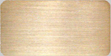
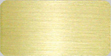
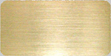
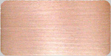
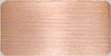
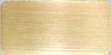
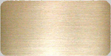
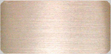
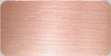
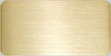
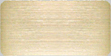
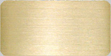
These are images
of the actual metal
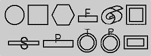
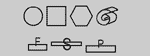
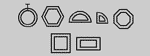
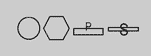
 Forms in which the alloy is regularly available in the USA

UNS Identification number Name, as it's known in the USA
(use both when specifying the metal)
Size ranges for each of
the forms of the alloy regularly available in the USA
Coppers
These are all "Copper". Specify the form you want, and accept from this group the alloy in which it is available.
C10100    Oxy-free Copper
C10200    Oxy-free Copper
C11000    Copper
C12200    Phosphorus Copper
C14500    Tellurium Copper
C18200    Chromium Copper
C18700    Leaded Copper
3 ft. x 8 ft. sheets
12
ft. bars
20
ft. tubes
20 ft. pipes
24 in. wide coils
These are all "Beryllium Copper". Specify the form you want, and accept from this group the alloy in which it is available.
C17200    Beryllium Copper
C17300    Beryllium Copper
C17510    Beryllium Copper
3 ft. x 8 ft. sheets
12
ft. bars
12 in. wide coil
Brasses
C21000    Gilding 12" wide coils
These are all "Commercial Bronze". Specify the form you want, and accept from this group the alloy in which it is available.
C22000    Commercial Bronze
C31400    Leaded Commercial Bronze
C31600    Leaded Commercial Bronze
3 ft. x 8 ft. sheets
12
ft. bars
12 in. wide coils

These are both "Red Brass". Specify the form you want, and accept from this group the alloy in which it is available.
C23000    Red Brass
C32000    Leaded Red Brass
12 ft. tubes and pipes
12 in. wide coils

C24000    Low Brass 3 ft. x 8 ft. sheets
12 in. wide coils
C26000    Cartridge Brass 3 ft. x 8 ft. sheets, 12 ft. bars
12
ft. tubes and pipes
12 in. wide coils
These are all "Yellow Brass". Specify the form you want, and accept from this group the alloy in which it is available.
C26800    Yellow Brass
C27000    Yellow Brass
C27200    Yellow Brass
C27400    Yellow Brass
12 ft. tubes
These are all "Muntz Metal". Specify the form you want, and accept from this group the alloy in which it is available.
C28000    Muntz Metal
C36500    Leaded Muntz Metal
C37000    Free Cutting Muntz Metal
4 ft. x 8 ft. sheets
These are Both "Low Leaded Brass". Specify the form you want, and accept from this group the alloy in which it is available.
C33000    Low Leaded Brass
C33500    Low Leaded Brass
12 ft. tubes
C34500    Leaded Brass 12 ft. bars
C35300    High Leaded Brass 2 ft. x 8 ft. sheets
12
ft. bars
12 in. wide coils
C35600    Engravers Brass 1 ft. x 8 ft. sheets
2 ft. x 4 ft. sheets
  C36000    Free Cutting Brass 12 ft. bars,
These are both "Architectural Bronze". Specify the form you want, and accept from this group the alloy in which it is available.
C38000    Architectural Bronze
C38500    Architectural Bronze
16 ft. lengths for all shapes
C44300    Admiralty Metal 26 ft. tubes
These are all "Naval Brass". Specify the form you want, and accept from this group the alloy in which it is available.
C46400    Naval Brass
C48200    Medium Leaded Naval Brass
C48500    Leaded Naval Brass
4 ft. x 8 ft. sheets
12
ft. bars

Bronzes
C51000    Phosphor Bronze - A 1 ft. x 8 ft. sheets
12
ft. bars
12 in. and 24 in. wide coils
C52100    Phosphor Bronze - C 12 in. and 16 in. wide coils
C54400    Phosphor Bronze B-2 12 ft. bars
These are both "Aluminum Bronze 7%". Specify the form you want, and accept from this group the alloy in which it is available.
C61300    Aluminum Bronze 7%
C61400    Aluminum Bronze 7%
3 ft. x 8 ft. sheets
12
ft. bars

C62300    Aluminum Bronze 9% 12 ft. bars
C62400    Aluminum Bronze 10-1/2% 12 ft. bars
C62500    Aluminum Bronze 13% 12 ft. bars
C63000   Nickel Aluminum Bronze 10% 12 ft. bars
C64200    Silicon Aluminum Bronze 12 ft. bars
C65100    Low Silicon Bronze B 6 ft. bars
12
ft. tubes
C65500    High Silicon Bronze A 2 ft. x 8 ft. & 4 ft. x 8 ft. sheets
12
ft. bars,
12 in and
16 in. wide coils
C67300    Leaded Silicon
               Manganese Brass
12 ft. bars
C67410    Silicon Manganese
               Aluminum Brass
12 ft. bars
These are both "Manganese Bronze". Specify the form you want, and accept from this group the alloy in which it is available.
C67500    Manganese Bronze
C67600    Manganese Bronze
12 ft. bars
Copper Nickels
C70600    Copper Nickel 10% 4ft. x 10ft. &  5ft. x 20ft. sheets
12
ft. bars
20
ft. tubes and pipes
C71500    Copper Nickel 30% 4 ft. x 10 ft. sheets, 12 ft. bars,
20
ft. tubes and pipes,
12 in. wide coils
Nickel Silvers
These are both "Nickel Silver 18%". Specify the form you want, and accept from this group the alloy in which it is available.
C75200    Nickel Silver 18% (65-18)
C77000    Nickel Silver 18% (65-18)
1 ft. x 8 ft. sheets,
12 in. wide coils

These are both "Nickel Silver 12%". Specify the form you want, and accept from this group the alloy in which it is available.
C76200    Nickel Silver 12% (56-12)
C79200    Nickel Silver 12% (56-12)
12 ft. bars,
12 in. wide coils

C79800    Leaded Nickel Silver 10% 8 in. x 8 ft. sheets,
16
ft. bars,
20
ft. channels
Continuous Cast Bronzes
C86300    Manganese Bronze 12 ft. bars,
12
ft. tubes
C90700    Tin Bronze 10 ft. bars
C93200    High Leaded Tin Bronze 12 ft. bars,
9
ft. tubes
C95400    Aluminum Bronze 12 ft. bars,
9
ft. tubes

Thursday, March 14, 2019

Machining of Sintered Bronze


Sintered bronze offers many advantages that modern machines take advantage of to improve their
performance. As a result, there is a high demand for sintered bronze components. Making sintered
bronze is a process that requires precision and the machining of sintered bronze is just as important
as how it is made. To get the most out of sintered bronze components, here is everything that you
need to know about the machining of sintered bronze.

Available in Different Lengths

If you need sintered bronze parts, the best place to start is with sintered bronze bar stock. Many
manufacturers keep stock on hand so that they can cut it to your project’s needs. Sintered bronze bar
stock is usually available in different lengths that are commonly needed or used to make more
appropriately sized parts.


Generally, an average length of sintered bronze is 6.5 inches long. When you need a specific size or
specific dimensions, the manufacturer starts with the closest available size to your needs. Then, the
sintered bronze bar stock is cut to size with precision machining tools.

Easier with Tungsten Carbide Tools

Cutting sintered bronze is possible with a range of high-powered precision tools. However, you’ll get
the best results using Tungsten Carbide tools. Tungsten Carbide is a high-strength, heat-resistant
metal alloy that can be sharpened extremely well. Tungsten Carbide tools tend to stay sharp longer
and hold up against bronze with better durability.


One key feature to look out for on Tungsten Carbide tools is how sharp they are. Sintered bronze
creates an uneven surface to cut because it is full of openings and does not have a uniform structure.
So, your tools must be as sharp as possible to be able to cut the uneven surfaces well. Tungsten
Carbide tends to hold its edge longer, making it one of the best options for the machining of sintered
bronze.

Machine with Slower Speeds

Production speed is important in a machining shop since you want to get your parts ready as fast as
possible. With sintered bronze, going to fast can lead to more problems. To get the best results,
machine with slower speeds. This gives you greater precision and minimizes the effect that machining
has on the sintered bronze. High speed machining generates a lot of heat and even precision tools
can make errors under heavy vibrations. By reducing the speed, you can significantly improve the
machining process.

Polish Cutting Surfaces

The machining of sintered bronze involves forcing bronze against a cutting tool. This exchange can
cause parts of the bronze to stick to the cutting surface. However, you can address this problem if you
polish cutting surfaces. This makes them much smoother and bronze has a harder time sticking to it.
You’ll get cleaner, more precise cuts since the pieces of bronze won’t interfere with the cutting process.

Not All Sintered Bronze Is Equal

When working with sintered bronze, it is important to remember that not all sintered bronze is equal.
Because of the way that it is made, the quality and property of sintered bronze can vary significantly
from manufacturer to manufacturer. To get the best results, acquire a smaller amount of the sintered
bronze and test it. That way, you can see how it will up during the machining process before you
commit to larger orders.

Ready to Get Started?

Atlas Bronze sells a range of engineered products for every industry, including made to order plates,
castings, and forgings. Check out our online store at www.atlasbronze.com to see what existing
products we sell or contact us for a quote on your custom project. Our expertise and experience can
help to ensure that you have access to the highest quality metal products for your project.

Wednesday, January 23, 2019

Sintered Bronze: What You Should Know


Sintered bronze is a popular choice for bearings, bushings, and similar applications, due to the
material’s high strength, rigidity, and temperature resistance. Sintering is a form of powder metallurgy
in which the metal powder is heated to a temperature below its melting point and then compressed
into the desired shape. Here is what you should know.
Creating the Metal Powder
Metal can be powdered in many different ways, but atomization is the most common commercial
process. The raw components of bronze (copper and tin) are individually melted in a high-heat furnace
and then transferred to a reservoir known as a tundish. This provides a controlled and consistent flow
of metal into the atomizing chamber, where it meets a high velocity stream of water, air, or an inert gas.
This disintegrates the molten metal into fine droplets that solidify into particles as they fall through the
atomizing chamber and are collected from the bottom of the tank.
If needed, mechanical methods such as milling, lathe turning, or chipping can be used to further reduce
the particles to the desired shape and size. Forces such as compression, shear, and impact all play a
role in the final size and shape of the particles.
Blending/Mixing
In this phase, the base metals, along with a powdered lubricant, are fed into a blender and mixed to a
homogenous blend. The lubricant is necessary to reduce friction and even out variations in density, as
well as to reduce ejection forces and thus minimize the risk of cracking. Commonly used lubricants
include stearic acid, metallic stearates, and stearin. If needed, the mix may be tumbled in a large mixing
vessel for further blending.
Compacting
Next, the blended bronze powder must be compressed, or compacted, to create cold welds of sufficient
“green strength” for handling. Precisely designed dies and punches are used to ensure uniform density.
Compaction is carried out at ambient temperature.
Sintering
Finally, the compacted metal is put into a furnace and heated to a temperature below its melting point.
This bonds the particles, increases strength, and controls porosity. Diffusion and recrystallization occur,
creating a strong, rigid, but somewhat porous finished product.
Finishing Processes
Finishing processes depend on the specific application for the sintered bronze product. Sintering tends
to create small dimensional changes, so parts with very tight tolerances may be sized in a separate
die. If additional lubrication is required, a vacuum process may be used to impregnate the part with oil.
If additional strength or hardness is desired, heat treating and oil quenching may be performed.
Finally, if a unique shape is needed, the finished product may be machined.
Ready to Start?

Atlas Bronze is a leading U.S. distributor of bronze, copper, brass, iron, and more. Contact us today at
1-800-478-0887 to place an order or learn about our custom products.

Wednesday, January 16, 2019

Understanding the Cold Drawing Process


Cold drawn metal, particularly steel, is common in many different types of consumer products. Drawn
metal is passed through a series of dies until it achieves the desired shape. Each die applies a specific
amount of pressure to the metal, assisted by a machine press. Drawn metal typically passes through
the dies multiple times. Cold drawn metal is manufactured at room temperature. Here is what you
should know about the process.
Preparation
Before cold drawing takes place, the raw material must undergo several preparatory steps:
Hot Rolling: Bars or coils of the raw metal are created through hot rolling at temperatures of
approximately 1700 to 2200 F. This produces a scaled, rough surface, and may also create size
variations.
Cleaning: The bar or coil is carefully cleaned to remove abrasive scaling and smooth the surface.
                    
Coating: The cleaned surface of the bar or coil is liberally coated with a lubricant to reduce friction
and improve the drawing process.
Pointing: The lead end has several inches removed from its diameter to allow the piece to pass
smoothly through the drawing dies. This is necessary because the die openings must be smaller than
the original bar or coil to apply the required pressure during drawing.
Cold Drawing
After the metal bar or coil has cooled to room temperature, the pointed end of the bar or coil passes
through the die and enters a gripping device on the drawing machine. The machine then pulls (draws)
the remainder of the bar or coil through the die. This reduces its diameter, increases its length, and
shapes its profile.
The finished product, referred to as either cold drawn or cold finish, appears bright and polished. Cold
drawing allows for more precise measurements and tighter dimensional tolerances than other forms of
metalworking, as well as sharper corners. Cold drawn metal also has a higher yield strength and
tensile strength than hot rolled metal.
Additional Processing
Depending on the product that is being created, cold drawn metal may undergo additional processing:
Multi-Pass Drawing: For complex shapes or profiles, the bar or coil may need to be drawn multiple
times. Multi-pass drawing pulls the metal through a series of gradually smaller die openings.
Annealing: Annealing is a thermal treatment that softens the material, modifies the microstructure,
and changes the mechanical properties. It can also remove internal stresses. Annealing may be
performed at any point in the drawing process. It is almost always performed between passes in
multi-pass drawing to improve ductility.
Ready to Start?
Atlas Bronze is a leading U.S. distributor of bronze, copper, brass, iron, and more. Contact us today at 1-800-478-0887 to place an order or learn about our custom products.

Closed Die Forging vs. Open Die Forging

Die forging is the process of forming heated metal into a specified shape through the use of dies.
These specialized pieces of hardened steel or ceramic use pressure and impact forces to form the
metal into a specific shape. Open die forging does not enclose the heated metal, allowing it to flow
freely except where the dies are placed. In closed die forging, the dies come together to fully enclose
the metal that is being forged. Here is a comparison of the two forging techniques.
Processes
For closed die forging, specific molding dies are created in advance. The metal is then heated and
poured into the bottom die. As the top die closes, it creates pressure and impact that forges the metal
into the desired shape.
For open die forging, dies that resemble tools are under the control of the metalworker. He or she
continuously orients and positions the metal as a forging hammer strikes it.
Applications
Forging modifies the internal grain structure of the worked metal, but open die forging and closed die
forging create different results and, thus, are suited to different applications.
Open die forging is best for very large pieces. In fact, some open die forges can create products that
are 80 feet long and weigh up to 136 metric tons. The process improves resistance to fatigue and
wear, boosts strength, reduces porosity, and minimizes the likelihood of voids in the finished piece.
However, the resulting process tends to be rough and somewhat imprecise. Open die forging is ideal
for simple shapes and large parts used in the railroad and aircraft industries.
Closed die forging is best for small pieces and those that require precise dimensions with very tight
tolerances. The finished pieces are tighter and have a smoother surface. However, it can be cost
prohibitive for small runs, as custom dies must be created. Fatigue resistance is also lower in pieces
that are closed die forged. Pieces created through closed die forging are often used in the mining, oil,
and automotive industries.
Advantages and Disadvantages
Benefits of Open Die Forging:
·         Improved microstructure and better fatigue resistance
·         Finer grain size and smoother grain flow
·         Increased strength
·         Longer life
·         Less waste
·         Fewer voids
·         Less expensive
Drawbacks of Open Die Forging:
·         Incapable of producing precision parts with tight tolerances
·         Further refining may be needed to create desired features
Benefits of Closed Die Forging:
·         Tighter grain formation
·         No limitation on materials
·         Smoother surface finish
·         Better precision and tolerances
·         Little to no refinement required for complex pieces
·         Economical for large runs
Drawbacks of Closed Die Forging:
·         High setup costs
·         Powerful vibrations require special building provisions
·         Potentially hazardous work environment
·         Costly for small runs
Each forging method is best for specific applications. It is always best to consult with a professional to
determine which production method is right for your unique needs.
Ready to Start?
Atlas Bronze is a leading U.S. distributor of bronze, copper, brass, iron, and more. Contact us today at 1-800-478-0887 to place an order or learn about our custom products.